
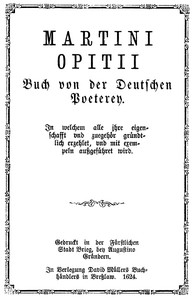
Buch von der Deutschen Poeterey by Martin Opitz
Okay, let's be clear: you don't read this book for a thrilling narrative. There are no characters or plot twists. Instead, Martin Opitz is giving a masterclass. Published in 1624, it's a short, direct guide on how to write poetry properly in German.
The Story
There's no story in the traditional sense. Think of it as a passionate argument made into a manual. Europe was in the middle of the Thirty Years' War, and German literature was seen as clunky and unsophisticated compared to its neighbors. Opitz steps in and says the problem isn't the language itself, but how we're using it. He breaks it all down: which syllables should be stressed, how to build a clean rhyme, and why you should stop forcing Latin structures into German sentences. He uses examples from ancient Greek and Roman poets to show these aren't new ideas, but timeless principles we've forgotten. His goal is simple: to give German poetry a dignified, clear, and powerful foundation.
Why You Should Read It
Reading this is like watching someone lay the first stone of a cathedral. You see the moment a craft becomes conscious of its own rules. It's surprisingly accessible—Opitz isn't writing for scholars alone, but for anyone who wants to write well. His passion is contagious. You feel his frustration with messy writing and his excitement for the potential he sees in his native tongue. It’s less about strict rules and more about unlocking the natural rhythm and beauty already hiding in the language.
Final Verdict
This is a niche read, but a rewarding one. It's perfect for writers curious about the roots of their craft, language lovers fascinated by how standards are born, or history fans who want to understand the cultural building blocks of modern Germany. If you enjoy seeing how ideas change the world, this slim volume is a powerful place to start. Don't expect a novel; expect a conversation with a fiercely opinionated, brilliant teacher from 400 years ago.
This historical work is free of copyright protections. Enjoy reading and sharing without restrictions.




Patricia Wilson
4 months agoJust what I was looking for.