
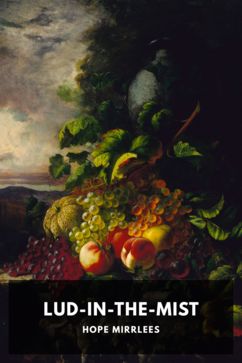
Lud-in-the-Mist - Hope Mirrlees
First published in 1926, Hope Mirrlees's Lud-in-the-Mist feels both timeless and utterly unique. It's often name-dropped as a major influence on writers like Neil Gaiman, but it stands powerfully on its own.
The Story
The town of Lud-in-the-Mist is proud, prosperous, and profoundly boring. It's governed by merchants and lawyers who value reason and order above all else. They have one cardinal rule: never speak of, or interact with, the land of Faerie that lies beyond the Debatable Hills. Fairy fruit is especially forbidden—a dangerous contraband that brings dreams, poetry, and chaos. When Mayor Nathaniel Chanticleer's son, Ranulph, falls ill after supposedly consuming the fruit, Nathaniel's orderly world cracks. To save his son and his town from a creeping, supernatural malaise, this most rational of men must venture into the mysteries he's spent a lifetime denying. His investigation becomes a detective story, uncovering old crimes and buried truths about Lud's founding.
Why You Should Read It
What hooked me wasn't just the plot, but the delicious tension Mirrlees creates. She paints Lud's society with such affectionate satire—you can almost smell the damp wool and hear the rustle of legal documents. Then, she lets the wildness seep in at the edges. Nathaniel is a fantastic hero precisely because he's so reluctant. Watching this nervous, conventional man be forced to become brave is deeply satisfying. The book isn't about epic battles; it's about the quiet rebellion of accepting wonder and acknowledging the parts of life—and ourselves—that don't fit into neat categories. It's a story about the cost of denying art, mystery, and joy.
Final Verdict
This is a perfect pick for readers who love smart fantasy with a literary feel. If you enjoyed the mannered weirdness of Susanna Clarke's Jonathan Strange & Mr Norrell or the mythic undercurrents in some of Gaiman's work, you'll find a kindred spirit here. It's also for anyone who's ever felt a little trapped by routine and secretly longed for a door to somewhere stranger. Fair warning: it starts slow, building its world like a careful lawyer making a case. But once the fairy fruit hits, you'll be glued to the page, racing alongside Nathaniel to discover what his town has forgotten.
This digital edition is based on a public domain text. Use this text in your own projects freely.
Lisa Anderson
2 years agoIf you enjoy this genre, the flow of the text seems very fluid. I learned so much from this.
Kimberly Garcia
1 year agoPerfect.
Betty King
1 year agoRecommended.
Ashley Wright
1 year agoWithout a doubt, the plot twists are genuinely surprising. I learned so much from this.




Jessica Thompson
1 year agoThe layout is very easy on the eyes.