
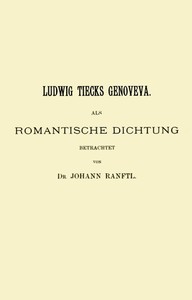
Ludwig Tiecks Genoveva, als romantische Dichtung betrachtet by Johann Ranftl
Johann Ranftl's 1865 analysis isn't your typical plot summary. It's a scholarly love letter to one of German Romanticism's foundational texts. Ranftl examines Ludwig Tieck's dramatic retelling of the Genoveva legend, a medieval story about a noblewoman falsely accused of adultery by a jealous rival. She's exiled, gives birth in the wilderness, and survives against all odds before her name is finally cleared. Ranftl doesn't just tell us this story; he picks apart how Tieck tells it, focusing on the mood, the symbolism, and the emotional core that made it a Romantic masterpiece.
Why You Should Read It
This book is a double feature. You get the haunting, dramatic story of Genoveva's suffering and resilience, filtered through Tieck's poetic lens. Then, you get Ranftl's passionate 19th-century perspective on why it all works. Reading it feels like sitting in on a brilliant lecture from over 150 years ago. Ranftl's insights show us what his generation valued in art: deep feeling, a connection to a mythical past, and the power of innocence under siege. It’s a direct line to how people once thought about and felt about literature.
Final Verdict
This one is for a specific but curious reader. It's perfect for students of German literature, history buffs of the Romantic period, or anyone who enjoys seeing how literary criticism has evolved. It's not a light beach read—it requires a bit of focus—but the reward is a richer understanding of a classic tale and the intellectual world that cherished it. Think of it as a guided tour through a Gothic cathedral, led by a deeply knowledgeable, slightly old-fashioned, but utterly devoted guide.
There are no legal restrictions on this material. You do not need permission to reproduce this work.
Logan Perez
1 year agoGreat reference material for my coursework.
Nancy Smith
5 months agoBeautifully written.
Emma Walker
1 year agoHelped me clear up some confusion on the topic.
Sandra Taylor
7 months agoHonestly, the clarity of the writing makes this accessible. A true masterpiece.

Ethan Ramirez
2 years agoVery interesting perspective.