
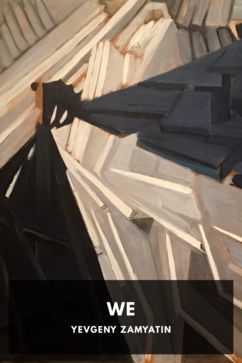
We - Yevgeny Zamyatin
Let's talk about a book that basically invented the modern dystopia. Written in 1921 by a Russian engineer, 'We' feels shockingly fresh and urgent a century later.
The Story
The book is the diary of D-503, a mathematician living in the One State, a city made entirely of glass. Everyone has a number, not a name. Life runs on the Table of Hours: you wake, work, eat, and take a walk with four other numbers at precisely assigned times. Personal freedom is the root of all unhappiness, so it's been eliminated. The goal is perfect, mathematical happiness. D-503 is building the Integral, a spaceship meant to conquer other worlds and force them into this blissful conformity. He's a true believer, until he meets I-330, a woman with sharp, vampire-like teeth and a rebellious smile. She drags him to the Ancient House, a museum from the chaotic past, gives him alcohol, and makes him experience something terrifying: imagination. His diary, once a record of perfect logic, becomes a frantic document of his unraveling as he's torn between the safe, numb order of the State and the dangerous, beautiful chaos of being an individual.
Why You Should Read It
Forget dry political theory. This book gets under your skin because it's so personal. We're trapped inside D-503's head as it breaks. You feel his panic when he first feels a 'soul' like a sickness. Zamyatin, an engineer himself, uses incredible math and machine metaphors to show a mind trying to compute the illogical. The glass city isn't just for surveillance; it symbolizes a life with no shadows, no secrets, and therefore, no self. What blew me away was how the story questions not just political control, but our deep human craving for easy answers. The State offers freedom from pain, worry, and choice. Is that a bargain we'd make? The tension is heartbreaking and thrilling.
Final Verdict
This is the perfect book for anyone who loves big ideas wrapped in a tense, psychological story. If you've read Orwell or Huxley and wondered where they got their inspiration, here's your answer. It's for readers who don't mind a narrator who's sometimes confused and frustrating, because watching him wake up is the whole point. It's a short, dense, and powerful punch of a novel that will make you look at your own messy, unpredictable life and maybe, just for a moment, appreciate the beautiful chaos of it all.
This historical work is free of copyright protections. It serves as a testament to our shared literary heritage.
Richard Young
9 months agoI didn't expect much, but the flow of the text seems very fluid. Absolutely essential reading.
Mason Ramirez
4 months agoUsed this for my thesis, incredibly useful.
Richard Smith
1 year agoI started reading out of curiosity and it challenges the reader's perspective in an intellectual way. Truly inspiring.
Christopher Garcia
1 year agoI have to admit, it challenges the reader's perspective in an intellectual way. A true masterpiece.


Michael Garcia
1 year agoExactly what I was looking for, thanks!