1

French enterprise in Africa — A Reader’s Guide
6
1
Project Gutenberg
2023
French -- Sudan; Tuaregs; Niger River -- Description and travel; Mali -- Description and travel
Readers of public-domain and historical texts
Project Gutenberg digital edition
en
Edition facts
Words: 142,601
Reading time: 621 min
Text sections: 19
Source:
Project Gutenberg record #71649
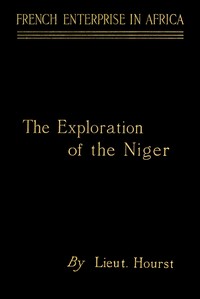
Lieutenant Hourst's 1898 narrative of his Niger voyage from Timbuktu to the sea, translated by N. D'Anvers, reveals his use of a fictional identity as Dr. Barth's nephew to navigate hostile territories and his reliance on the Amenokal's protection.
Editorial Edition Score
4.9/5
★★★★★
★★★★★
Calculated from edition completeness, EPUB availability, text structure and catalogue metadata. Not a user rating.
Edition quality
Lieutenant Hourst opens his narrative with a translator's note that immediately signals the book's dual character: a personal adventure and a colonial document. The translator, Mrs. Arthur Bell (N. D'Anvers), points out Hourst's 'jealous hostility' toward the English, whom he calls 'our rivals,' while praising his achievement in being the first to descend the Niger from Timbuktu to the sea without loss of life. This framing sets up a tension between national rivalry and scientific exploration that runs throughout the text.
Hourst's own voice emerges in the excerpts as direct and dramatic, often recounting moments of acute danger. He describes the river splitting into 'thousands of channels,' the threat of hidden rocks, and the constant need for guides. His narrative is punctuated by tense encounters with local leaders, where his survival depends on a single fiction: passing himself off as Abdul Kerim, nephew of the revered Dr. Barth.
The Fiction of Abdul Kerim
Hourst's most striking narrative strategy is his adoption of a false identity. On the advice of Béchir Uld Mbirikat, he claims to be the nephew of Dr. Barth, the German explorer known in the Sudan as Abdul Kerim. This fiction, he writes, allowed him to 'emerge safely from every situation, however embarrassing.' The translator notes that Hourst shows no shame about this deception, yet it reveals a pragmatic understanding of local politics: the natives do not distinguish European nationalities but class all whites together. The ruse works because Barth's reputation precedes him, and Hourst leverages it to gain trust and safe passage.
This detail is not merely anecdotal; it shapes the entire narrative. Hourst's interactions with chiefs and villagers are filtered through this assumed persona. He presents himself as a servant of the Most High, a name that resonates with Muslim communities along the river. The fiction becomes a lens through which readers must interpret his claims of straightforwardness and honesty in other dealings.
Peril and Diplomacy on the Niger
The excerpts convey a constant sense of physical and political danger. Hourst describes the river's labyrinthine channels, where a wrong choice could wreck his boat, and the threat of ambush from warriors hidden in dense vegetation. At Satoni, he is hailed by the son of a chief who is relieved to find Hourst is not the same white men who came the year before—a hint of previous violent encounters. The arrival of three Tuaregs, including a relation of Bokar Wandieïdu, raises the stakes: a coalition of Wagobés, Kourteyes, Fulahs, and Toucouleurs has formed to block his passage. Hourst's throat is parched with anxiety as he awaits the outcome.
His salvation comes from Madidu Ag el Khotab, the Amenokal (supreme chief) of the Awellimiden Tuaregs, who sends orders to let Hourst pass. Hourst credits him alone for his survival, declaring he owes no such debt to any man of his own race. This moment highlights the precariousness of his journey, where diplomacy and luck matter more than military force.
Encounters with Faith and Culture
After the threat of coalition passes, Hourst faces a different kind of challenge: the son of El Mekki attempts to convert him to Islam. The young man's argument is heartfelt: 'We like you, and we think that you like us. We cannot hope ever to see you again in this life, do not deprive us of the chance of meeting you once more in another world.' He warns that Hourst will burn in hell unless he converts. Hourst finds this amusing, but the episode reveals the cultural gap between the French officer and his hosts. The attempt at proselytism is framed as a gesture of friendship, yet Hourst's condescending tone suggests he does not take the theological exchange seriously. This moment, like the identity fiction, underscores how Hourst navigates—and sometimes misreads—the social and religious landscape of the Niger.
The Translator's Lens and Colonial Context
The translator's note provides an essential frame for reading Hourst's narrative. N. D'Anvers describes the work as 'brightly-written' and 'peculiarly opportune' given French colonial ambitions in the Western Sudan. She acknowledges Hourst's prejudice against England but argues his work adds valuable knowledge of the Niger and its tribes. Her comparison of Hourst to Livingstone, based on his peaceful passage, is telling: it aligns French exploration with a humanitarian ideal, even as she notes the 'fiction' at its heart. Readers should be alert to this double perspective. Hourst's own text is a product of its time, full of national pride and racial assumptions, yet it also records the voices of African chiefs and the complex alliances that made his journey possible. The translator's intervention reminds us that the narrative is mediated, and that Hourst's 'personal narrative' is also a political document.
Hourst's narrative rewards readers who pay attention to its silences and contradictions. The fiction of Abdul Kerim, the reliance on Madidu's protection, and the dismissive treatment of Islamic conversion all point to a deeper story about how European explorers depended on African knowledge and power structures while often misrepresenting those relationships. As you read, note where Hourst's confidence in his own agency gives way to acknowledgment of dependence—these are the moments that reveal the true texture of his journey.
Reader reflection
What did you think of this book?
Answer a few questions and save a private reflection on this device.
Your progress
0
/
10
2
How much did you enjoy the reading experience?
3
Would you pass this book on to a friend?
4
Did the language feel accessible?
5
Was the book easy to understand?
6
How personally connected did you feel to the book?
7
How useful did the reading feel?
8
Was the book moving at the right speed?
9
What is the main idea you are taking away?
10