1

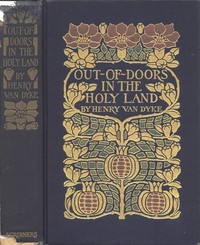
Out-of-Doors in the Holy Land: Impressions of Travel in Body and Spirit — A Closer Reading
12
7
Project Gutenberg
2009
Authors, American -- 20th century -- Biography; Palestine -- Description and travel; Van Dyke, Henry, 1852-1933 -- Travel -- Palestine
Readers of public-domain and historical texts
Project Gutenberg digital edition
en
Edition facts
Words: 58,323
Reading time: 254 min
Text sections: 8
Source:
Project Gutenberg record #29314
Henry Van Dyke's travelogue blends physical journey through Palestine with spiritual reflection, using biblical stories and personal encounters to explore landscape and faith.
Editorial Edition Score
4.7/5
★★★★★
★★★★★
Calculated from edition completeness, EPUB availability, text structure and catalogue metadata. Not a user rating.
Edition quality
Henry Van Dyke's Out-of-Doors in the Holy Land opens not with a grand arrival but with a confession of long-deferred desire. The preface reveals that for years he feared visiting Palestine would shatter his beliefs, until a near-death experience taught him that no belief worth keeping fears reality. This personal framing sets the tone for a narrative that intertwines physical travel with spiritual introspection, as Van Dyke seeks to encounter the land not as a tourist but as a pilgrim open to both disenchantment and wonder.
From Fear to Expectancy
The preface establishes a trajectory from youthful hope to adult fear, then to a renewed readiness for discovery. Van Dyke writes that after a “little voyage to the gates of death,” he regained the feeling that each day might bring “something new and wonderful and welcome.” This personal transformation is the lens through which he approaches Palestine. Rather than claiming authority as a scholar or theologian, he presents himself as a traveler whose spiritual journey is as significant as the physical one. The reader is thus prepared for a narrative that values personal impression over exhaustive description.
Landscape as Scripture
In the excerpt describing the Brook Jabbok, Van Dyke moves fluidly between present scenery and biblical narrative. He notes the “deep, grand valley” and “thickets of oleander” before recalling the story of Jacob wrestling with a man until daybreak. The landscape becomes a stage for scripture, but Van Dyke does not simply overlay text onto terrain; he questions the meaning of the encounter, asking whether Jacob’s struggle was with fear of his brother Esau. This method invites readers to see the land as both historical and symbolic, where natural features evoke spiritual questions.
A Dream of Restoration
Van Dyke interrupts his scenic description to recount Laurence Oliphant’s 1880 plan for Jewish resettlement in Gilead. He details the proposed territory, railways, and government, then notes its failure due to political opposition and lack of Jewish enthusiasm. This digression is striking for its specificity and its contrast with the surrounding lyrical prose. Van Dyke presents the scheme as a “beautiful dream” that did not come true, then quickly returns to the evening stroll and the sunset. The juxtaposition suggests that human plans, however grand, are fleeting compared to the enduring landscape and its biblical associations.
The Weight of Memory
Van Dyke’s account of Absalom’s death near the same valley illustrates how biblical stories infuse the land with pathos. He quotes the narrative from 2 Samuel, describing Absalom caught in an oak and Joab’s fatal thrust, then David’s lament. Van Dyke comments that “to remember a story like that is to feel the pathos with which man has touched the face of nature.” This observation reveals his method: the land is not merely observed but interpreted through the stories that have occurred there. The reader is encouraged to approach each location as a palimpsest of human experience and divine encounter.
Van Dyke’s narrative rewards readers who attend to both the physical details of travel—the light, the vegetation, the contours of the land—and the spiritual questions that arise from them. The excerpts suggest a work that moves between personal reflection, biblical meditation, and historical curiosity. A first reading might focus on how Van Dyke balances these elements, noting where he lingers on description and where he turns to scripture or contemporary events. The journey is as much inward as outward.
Reader reflection
Your personal reading reflection
Build a private reading journal entry for this title.
Your progress
0
/
10
2
What was your overall reaction to the book?
3
How likely are you to recommend this book?
4
How much effort did this book require?
5
Did anything about the book feel genuinely new?
6
How did the pace of the book feel?
7
Did it raise ideas you would like to talk about?
8
How clear did the writing feel?
9
What did this book teach you most?
10