1

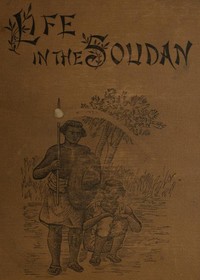
Life in the Soudan Adventures Amongst the Tribes, and Travels in Egypt, in 1881 and 1882 — Story, Setting & Ideas
23
15
Project Gutenberg
2018
Sudan -- Description and travel; Egypt -- Description and travel; Williams, Josiah; Sudan -- Discovery and exploration
Readers of public-domain and historical texts
Project Gutenberg digital edition
en
Edition facts
Words: 78,975
Reading time: 344 min
Text sections: 9
Source:
Project Gutenberg record #56657
Dr. Josiah Williams's 1884 travelogue recounts his 1881-1882 journey through Egypt and Sudan, blending medical observations, ethnographic detail, and personal adventure. The narrative is marked by candid descriptions of local customs, diplomatic negotiations with tribal leaders, and the practical challenges of desert travel, all conveyed in a direct, often wryly humorous tone.
Editorial Edition Score
4.7/5
★★★★★
★★★★★
Calculated from edition completeness, EPUB availability, text structure and catalogue metadata. Not a user rating.
Edition quality
Dr. Josiah Williams, a surgeon-major in the Imperial Ottoman Army, opens his account of travel in Egypt and the Sudan with a brisk, detail-oriented style that immediately signals a writer more concerned with accurate observation than with literary flourish. His description of a dinner with a local sheik, for instance, includes a frank and comical account of the sheik's habit of belching at meals—a detail Williams includes precisely because he wishes to tell readers "exactly what kind of a man this was." This willingness to record the unvarnished, sometimes awkward realities of cross-cultural encounter is a hallmark of the narrative.
A Doctor's Eye for Detail
Williams's medical training shapes his descriptive choices throughout the text. He notes the ailments he treats among Arab patients, the physical condition of camel-drivers, and the hygienic practices of the camps. But his clinical eye extends beyond medicine: he observes the precise number of spearheads glinting in moonlight during a magic lantern show, the exact dimensions of a pyramid's interior, and the specific vegetation—"dhoum palms, tamarisk, and tamarind, nebbuck, baobob, hegleek, ebony"—that surrounds his tent. This cataloging impulse gives the narrative a documentary texture, as if Williams is compiling a field report for the Royal Geographical Society (of which he was a fellow) while also entertaining a popular readership.
Negotiation and Diplomacy on the Frontier
Williams's interactions with local leaders reveal a pragmatic, often wry approach to diplomacy. When hiring camels, he notes that owners "cheerfully assured us that we should very likely all be killed by the Basé or Kunama people, and they would lose their camels"—a bargaining tactic he records without indignation. His description of Sheik Moussa's "genial belch" is paired with an appreciation for the sheik's authority and the careful negotiation of wages and supplies. These passages show a traveler who understands that survival in the Sudan depends on reading social cues and maintaining a flexible, sometimes amused, stance toward cultural differences.
The Spectacle of Technology in Equatorial Africa
One of the most vivid set-pieces in the excerpts is the magic lantern exhibition Williams stages for a local sheik and his retinue. He describes the scene with a showman's relish: three hundred men in loincloths, "glittering spear-heads," and the flickering light of lanterns. The audience's delight at images of the Queen, the Prince of Wales, and familiar animals is met with Williams's own delight in their reaction. He notes that he would bring a galvanic battery on a future trip, revealing a Victorian confidence in the power of technology to astonish and amuse. The episode encapsulates the book's blend of ethnographic curiosity, entertainment, and colonial-era showmanship.
Voice and Self-Presentation
Williams's narrative voice is that of a seasoned traveler who is not afraid to mock his own discomforts or to poke gentle fun at his companions. He describes a German fellow-traveler as "sleeby," and recounts his camel playing "a scurvy trick" without melodrama. His prose is direct, often colloquial, and punctuated by dry asides. This self-deprecating tone, combined with a refusal to sensationalize danger, gives the book an air of understated competence. Even when noting that three hundred armed men could easily have killed his party, Williams adds, "I am happy to say this ceremony was not included in the evening's programme." The humor is a deliberate rhetorical choice, making the unfamiliar more approachable for his British readership.
Readers approaching Life in the Soudan should expect a narrative that moves briskly from one incident to the next, with little philosophical reflection but a great deal of concrete detail. Williams is a reliable observer of surfaces—customs, landscapes, negotiations—and his book is best read as a series of sharply drawn vignettes rather than a sustained argument. The author's variable spelling of place names, preserved in this edition, adds a period flavor. For those interested in the texture of late-Victorian travel writing, or in the practicalities of exploration before the Mahdist War, this account offers a candid, often entertaining window.
Reader reflection
How did this book work for you?
Your answers remain private and are stored only in this browser.
Your progress
0
/
10
2
How did the book work for you overall?
3
How likely are you to recommend this book?
4
How easy was the book to follow?
5
How valuable was this book for your own interests?
6
How much did the book move you?
7
How personally connected did you feel to the book?
8
How clear did the writing feel?
9
In one sentence, what did you learn?
10